
Why Manufacturers Can't See Their Own Margins
Manufacturing finance breaks in a specific way, and it doesn't break loudly.

CROSS-FUNCTIONAL VISIBILITY
Stop starting meetings with fifteen minutes of reconciling numbers.
The classic pathology of a privately held business is that each function has its own version of the truth. Sales knows sales. Ops knows ops. Finance knows the ledger. Nobody knows the business. Every meeting starts with fifteen minutes of reconciling numbers before anyone can talk about a decision. The owner sits in the middle of it as the human integration layer.
Take the hospitality version. F&B is running its own margin analysis off the POS. Rooms is looking at RevPAR from the PMS. Sales is talking about corporate account performance off a spreadsheet the corporate account manager keeps. Finance is producing a group P&L off a chart of accounts that predates two of those systems. All four numbers are real. None of them agrees with any of the other three at the total. The owner ends up trusting the department head who is most confident, not the picture that's most accurate.
The manufacturing version is often quieter but costs more. Sales knows what it sold. Production knows what it made. Warehouse knows what moved. Finance knows what got invoiced. Nobody, in real time, knows the margin. Product-level profitability lives in one person's head or one person's spreadsheet. When that person leaves, or takes annual leave in August, the number goes with them. Decisions still get made, because they have to. They just get made on the wrong picture.
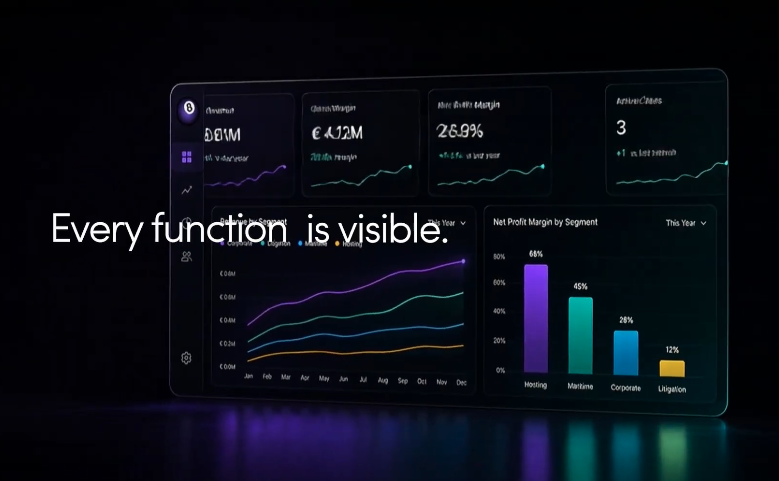
Cross-functional visibility isn't a dashboard feature. It's a design decision made at the foundation. The chart of accounts has to reflect how the business actually makes money, not how the ledger was structured a decade ago. The flows between systems have to run without a person in the middle re-keying them. Each function's KPIs have to be defined once, at the group level, so ops and finance are measuring the same thing when they use the same word. Only when that groundwork is done can the owner open one page and see every function on it, and trust what the page is telling them.
Every function on one page changes the shape of the leadership meeting. Instead of fifteen minutes of reconciliation, you get five minutes of context and forty minutes of decision. The department heads stop defending their number and start owning their contribution to the shared picture. The owner stops being the human middleware and starts being the person who allocates capital.
That's the shift. It doesn't come from software. It comes from building the picture the same way, from the same source, for everyone in the room.
If your leadership meetings still spend more time reconciling than deciding, that's the conversation to have.
A live 30-minute conversation. Nothing to prepare, no figures required. You leave knowing your biggest finance gaps and what to fix first.
Book the CallKEEP READING
Manufacturing finance breaks in a specific way, and it doesn't break loudly.

Privately held hospitality breaks in the same order almost every time, from single-property owner-operators to multi-property groups.

What businesses lose when senior, industry-specific finance support isn't in place: money, time, opportunities, and quietly compounding risk.