
Why Manufacturers Can't See Their Own Margins
Manufacturing finance breaks in a specific way, and it doesn't break loudly.

INTEGRATED SYSTEM
One integrated view of the business, built from the tools you already have.
The last twenty years of finance technology have given the mid-market an incredible amount of software. What they haven't given it is one integrated view of a business. Most privately held groups run something like eight to fifteen tools that each own a slice of the operational reality and none of which agree at the total. The gap between those tools is where cash and margin bleed.
You can see this most clearly at the boundary between operations and finance. Operations knows what happened. Finance knows what got recorded. Nobody knows what it means in real time. The gap is filled by a person, usually in finance, spending the first ten days of every month reconciling what should have already reconciled itself. That person is doing heroic work. The business is paying a hidden tax for the fact that it hasn't been built to run as one system.
In hospitality, the gap sits between PMS, POS, payroll, procurement, and the general ledger. The operational data is rich. The financial view of it is late, aggregated, and doesn't drill. In manufacturing, it sits between the ERP, the production system, the warehouse system, the sales pipeline, and the ledger. Every one of those systems can produce its own report. None of them, on its own, tells the MD which product line is currently making money and which is quietly consuming it.
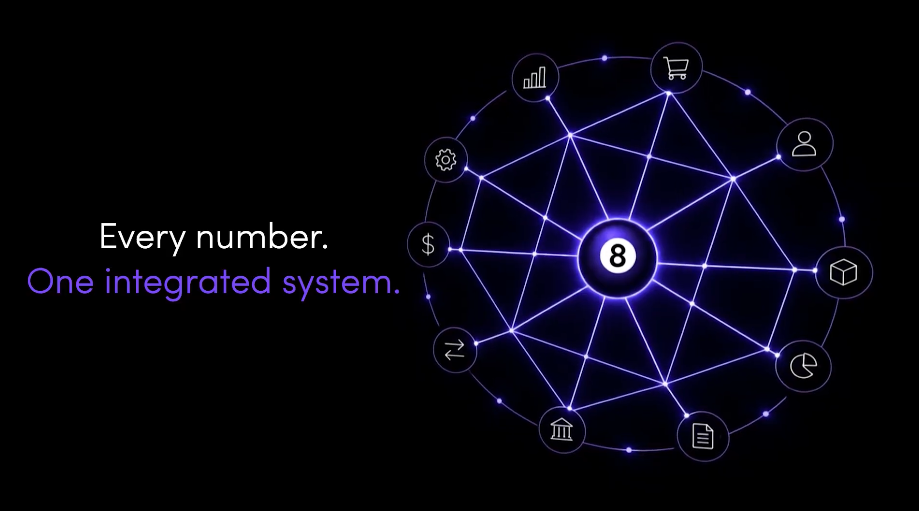
The frame we come in with is simple: every function, every transaction, every number, one integrated system. Not one piece of software. One integrated system, made from the tools you already have, plumbed properly, with the flows fixed, the reconciliations automated, and the reporting layer built on top of a base that agrees with itself. What happens on the floor reaches the numbers without someone re-typing it. What the leadership team sees on Monday morning is the same picture the ops team was looking at on Friday afternoon.
Getting there is the unglamorous part. We start with the flows, correct the bad data, rebuild the chart of accounts, integrate the systems, embed the controls, and only then build the visibility layer. Nothing is bolted on top until the base beneath it can be trusted. That's the reason it holds up over time.
Every number. One integrated system. Everything else, control included, follows from that.
If your business runs on data that doesn't quite add up when you put it all in one place, that's the conversation to have.
A live 30-minute conversation. Nothing to prepare, no figures required. You leave knowing your biggest finance gaps and what to fix first.
Book the CallKEEP READING
Manufacturing finance breaks in a specific way, and it doesn't break loudly.

Privately held hospitality breaks in the same order almost every time, from single-property owner-operators to multi-property groups.

What businesses lose when senior, industry-specific finance support isn't in place: money, time, opportunities, and quietly compounding risk.