
Why Manufacturers Can't See Their Own Margins
Manufacturing finance breaks in a specific way, and it doesn't break loudly.

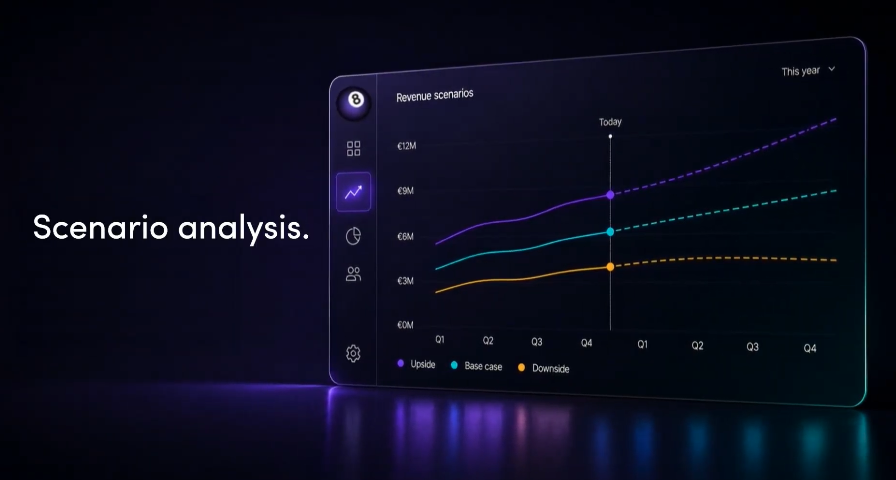
SCENARIO ANALYSIS
Scenario work is stress testing, not fortune telling.
Owners don't usually get to make one decision in a stable market. They make a series of decisions in a market that keeps moving. Scenario analysis is the mechanism that lets them think two moves ahead before the market forces the move on them.
In hospitality, the scenarios that matter are usually about pricing pressure, occupancy shocks, and cost step-changes. What happens to the season's cash if source-market bookings drop fifteen per cent because a currency moves against us. What happens if a competitor across the bay opens six months earlier than planned. What happens if we shift ten per cent of room revenue to a corporate mix at lower rate but higher off-season occupancy. Most groups have opinions about these questions. Very few can put a number against each answer that the owner would actually bet on.
In manufacturing, the scenarios are more granular but the logic is the same. What happens to next quarter's margin if input costs rise four per cent and we hold price. What happens if we hold margin and lose fifteen per cent of unit volume. What does the cash curve look like if we accept a new export contract that pays on ninety-day terms rather than thirty. What does adding a second shift do to fixed cost coverage. What does not adding it do to lead times and the churn rate on our top ten customers. Decisions like these are being made every month. Most of them are being made on feel.
Scenario analysis is the layer above the actuals where you play the numbers forward under different assumptions and see what breaks first. It's not fortune telling. It's stress testing. The value isn't in the exactness of any single scenario. The value is in the owner walking out of the modelling session knowing which lever is worth pulling and which is worth leaving alone, and knowing what the early signal would be if the world moved toward the harder scenario.
We build the scenario layer on top of the same foundation the reporting sits on, which is why it can move quickly when you need it. When a live decision comes up, we don't start with a blank spreadsheet. We start with the model that already agrees with the last close, run the three or four scenarios that matter, and give you a shortlist of the two or three variables to watch as the month unfolds.
Playing the numbers forward before the market plays them at you is the closest thing to an unfair advantage a privately held business can build. It requires a base that agrees with itself, a modelling layer designed for decisions rather than presentations, and someone senior in the room to argue about the assumptions honestly.
If your next big call would benefit from being modelled under three plausible futures rather than one hopeful one, that's the conversation to have.
A live 30-minute conversation. Nothing to prepare, no figures required. You leave knowing your biggest finance gaps and what to fix first.
Book the CallKEEP READING
Manufacturing finance breaks in a specific way, and it doesn't break loudly.

Privately held hospitality breaks in the same order almost every time, from single-property owner-operators to multi-property groups.

What businesses lose when senior, industry-specific finance support isn't in place: money, time, opportunities, and quietly compounding risk.