
Why Manufacturers Can't See Their Own Margins
Manufacturing finance breaks in a specific way, and it doesn't break loudly.

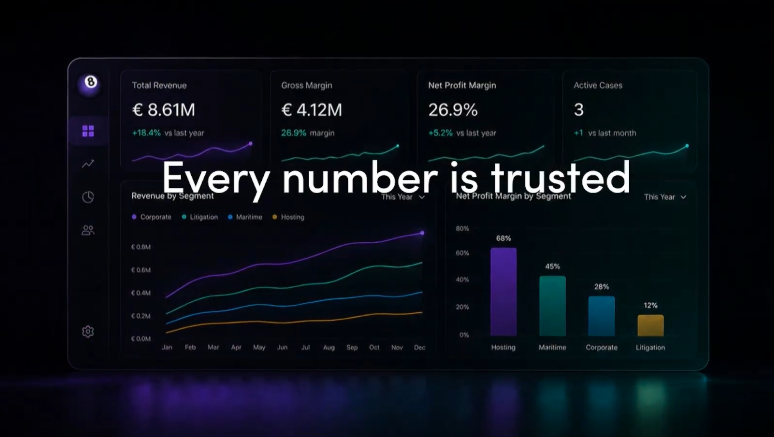
TRUST
Trust is a compounding asset. Once it goes, no formatting brings it back.
The reason so many owners have quietly stopped opening the dashboard someone built for them last year is not that the dashboard is ugly. It's that they don't fully trust the numbers under it. And once trust goes, no amount of formatting brings it back.
Trust is a compounding asset. Every time a number on screen matches what the owner already knew was true from being in the business, trust goes up a little. Every time a number doesn't match and nobody can explain the gap in the next twenty minutes, trust drops a lot. Two or three of those in a row and the whole reporting layer becomes background noise the owner works around rather than works with.
In hospitality, the trust break tends to happen at the total. Revenue on the report doesn't match what the owner remembers from the busiest week of the season. Or the cost of sales line moves in a direction the F&B manager doesn't recognise. Or the labour percentage looks too clean given how much overtime was actually run. Each of these can be legitimate. The problem is that if nobody can walk from the number on the screen back to the transaction on the day, the number stops being usable, whether it's technically right or not.
In manufacturing, the trust break is often at the margin. The dashboard says a product runs at 34 per cent margin. The MD, who has been in the plant for twenty years, has a strong feeling it doesn't. Somewhere between the standard costs, the actual yields, the allocated overheads, and the sales price on the last three orders, something is shifting the picture. Nobody has time to sit down and unpick which of those it is. The MD stops using that dashboard and goes back to gut.
Trust is engineered. It comes from a chart of accounts that reflects how the business actually operates, from data flows that don't lose their integrity between systems, from cut-off rules that are consistent month over month, and from a small enough set of headline numbers that each one can be defended live down to the transaction. When those foundations are right, the owner can look at the screen and back their own business decisions on it, because the number on the screen is a number they can reach through the report to touch.
We spend more time on this than most advisors. Fixing the historic first is unglamorous work. It's also the reason the dashboard is still trusted in year two, and the reason the owner is still looking at it.
If you're carrying reporting the team produces but the owner doesn't fully believe, that's usually a foundation problem, and it's a half-hour conversation.
A live 30-minute conversation. Nothing to prepare, no figures required. You leave knowing your biggest finance gaps and what to fix first.
Book the CallKEEP READING
Manufacturing finance breaks in a specific way, and it doesn't break loudly.

Privately held hospitality breaks in the same order almost every time, from single-property owner-operators to multi-property groups.

What businesses lose when senior, industry-specific finance support isn't in place: money, time, opportunities, and quietly compounding risk.